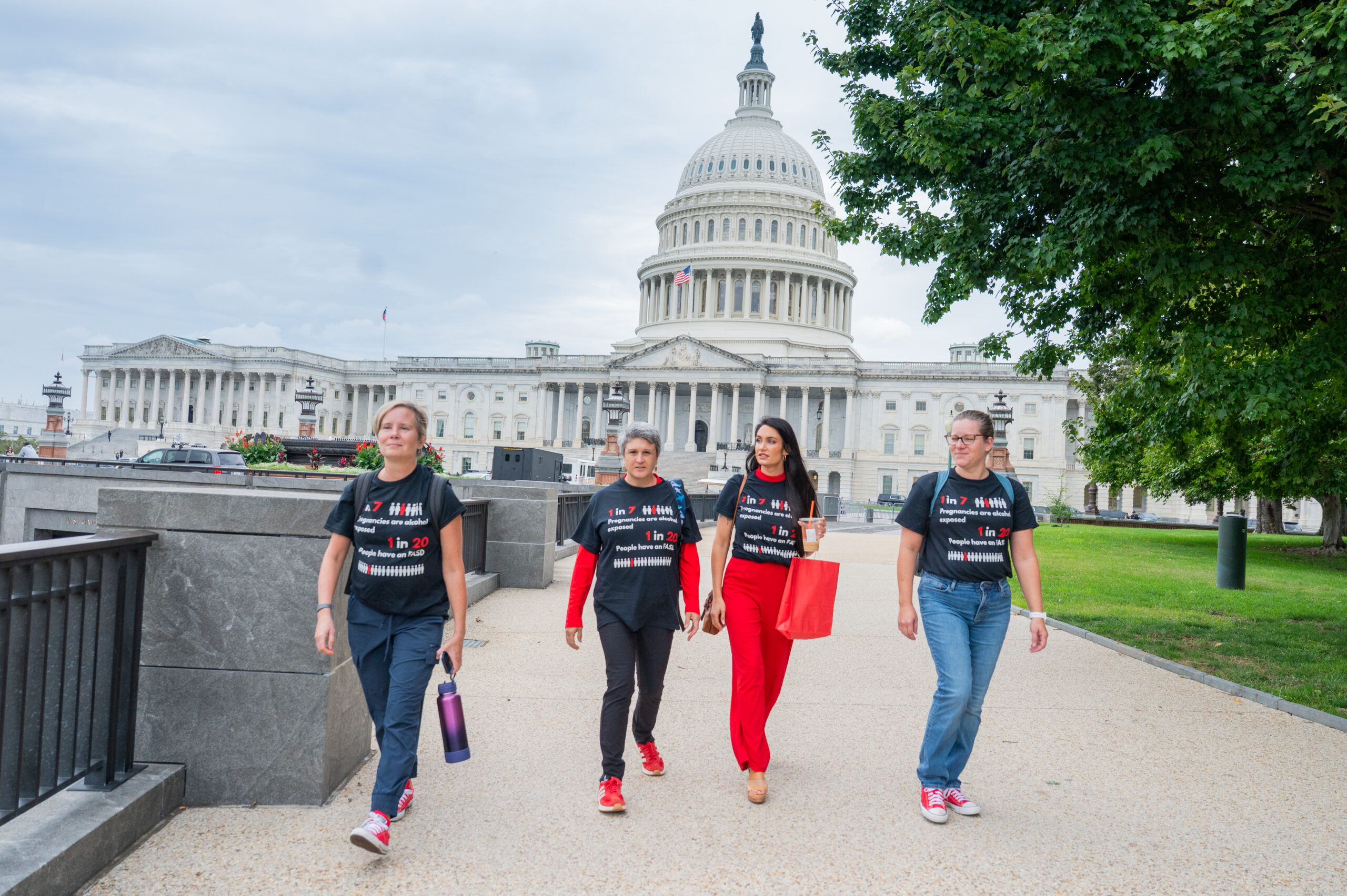
The House Budget Committee has advanced President Trump’s legislative priority bill by a narrow 17-16 vote, moving the bill onto the House Rules Committee. This list of priorities calls for a drastic reduction in Medicaid spending to offset tax cuts, potentially impacting those most in need of medical support. Let’s take a look at how changes to Medicaid will impact the FASD community.
The Numbers
Medicaid provides support to 4 in 10 children in the United States, including 8 in 10 children experiencing poverty. Over 50% of spending on long-term care, such as at-home care, comes from Medicaid. This type of care offers essential supports that enable individuals to remain at home with their families. Approximately 10% of all children in the U.S. have special education plans, including Individual Education Plans (IEPs). Medicaid currently covers about half of all students with an Individualized Education Program (IEP). When a student is enrolled in Medicaid and has an IEP, Medicaid is required to cover the cost of services identified as appropriate under the Individuals with Disabilities Education Act (IDEA).
The Deficits
If Medicaid spending is reduced, states will need to make difficult decisions to meet savings targets. Will savings come from limiting the number of people covered? Will states cover fewer benefits, or will they lower payments to physicians and other healthcare providers? With Medicaid being the only form of medical coverage for 1 in 3 children, no Medicaid means no medical care for too many. Even those with supplemental private insurance will suffer, as long-term care and at-home care are typically not provided by private insurance.
Without Medicaid, school districts will be responsible for paying for medical supports mandated by IDEA for students with an IEP. Some schools currently provide access to basic screenings, speech and physical therapies, substance use disorder treatment, and mental health supports. For students with an IEP, these services can be reimbursed, costing the school districts nothing while providing an essential service to families.
Those supported by Medicaid are often those most in need of medical support, especially children. A staggering 47% of children covered by Medicaid have co-occurring conditions and multiple functional difficulties, compared to 18% of children covered by private insurance. There are over 400 known co-occurring conditions associated with FASD, affecting nearly every system in the body. Without early intervention, secondary outcomes like relationship issues and difficulties in school are more likely to occur.
On Work Requirements
One reform favored by some in Congress is tighter controls on work requirements for Medicaid recipients. The Congressional Budget Office (CBO) suggests that stricter work requirements for adults eligible for Medicaid will save $300.8 billion over ten years. The CBO also reports that 10.3 million Americans will lose Medicaid coverage. Requirements would mandate Medicaid recipients to work at least 80 hours a month. This can include working at a job, volunteering, education, or job training.
Certain individuals would be exempt from work requirements, including pregnant people, full-time students, primary caregivers of young children and individuals with a disability, and those deemed “unfit to work”. States can define who is capable of work, which means those with a non-apparent and misunderstood disability, like FASD, might be disproportionately impacted. Most states do not explicitly list FASD as a qualifying condition for care. Instead, individuals usually need to qualify for waiver services through an alternate diagnosis.
Will all adults with an FASD need to adhere to work requirements? Will they be supported when reporting their hours? Will appropriate accommodations be made for workers with disabilities? Will competitive integrated employment efforts be bolstered to provide adequate support and training for workers?
Notably, a CBO analysis of an un-passed bill from 2023 reported that work requirements would increase the number of people without health insurance by 600,000, but would NOT grow the workforce. This suggests that individuals receiving Medicaid benefits who can work are already doing so. These requirements would take benefits away from those who cannot prove they deserve the support provided through Medicaid. When work requirements were mandated in Arkansas in 2018, about 25% of Medicaid recipients lost coverage. Most lost coverage was due to an inability to prove eligibility or failure to report work status. Evidence from Arkansas shows that work and reporting requirements were confusing to enrollees, and the changes require major system overhauls, costing states anywhere from $10 million to over $270 million. A federal court unanimously deemed the Arkansas bill unlawful in 2020.
Further Reading and References
Tracking the Medicaid Provisions in the 2025 Reconciliation Bill | KFF
5 Key Facts About Children with Special Health Care Needs and Medicaid | KFF