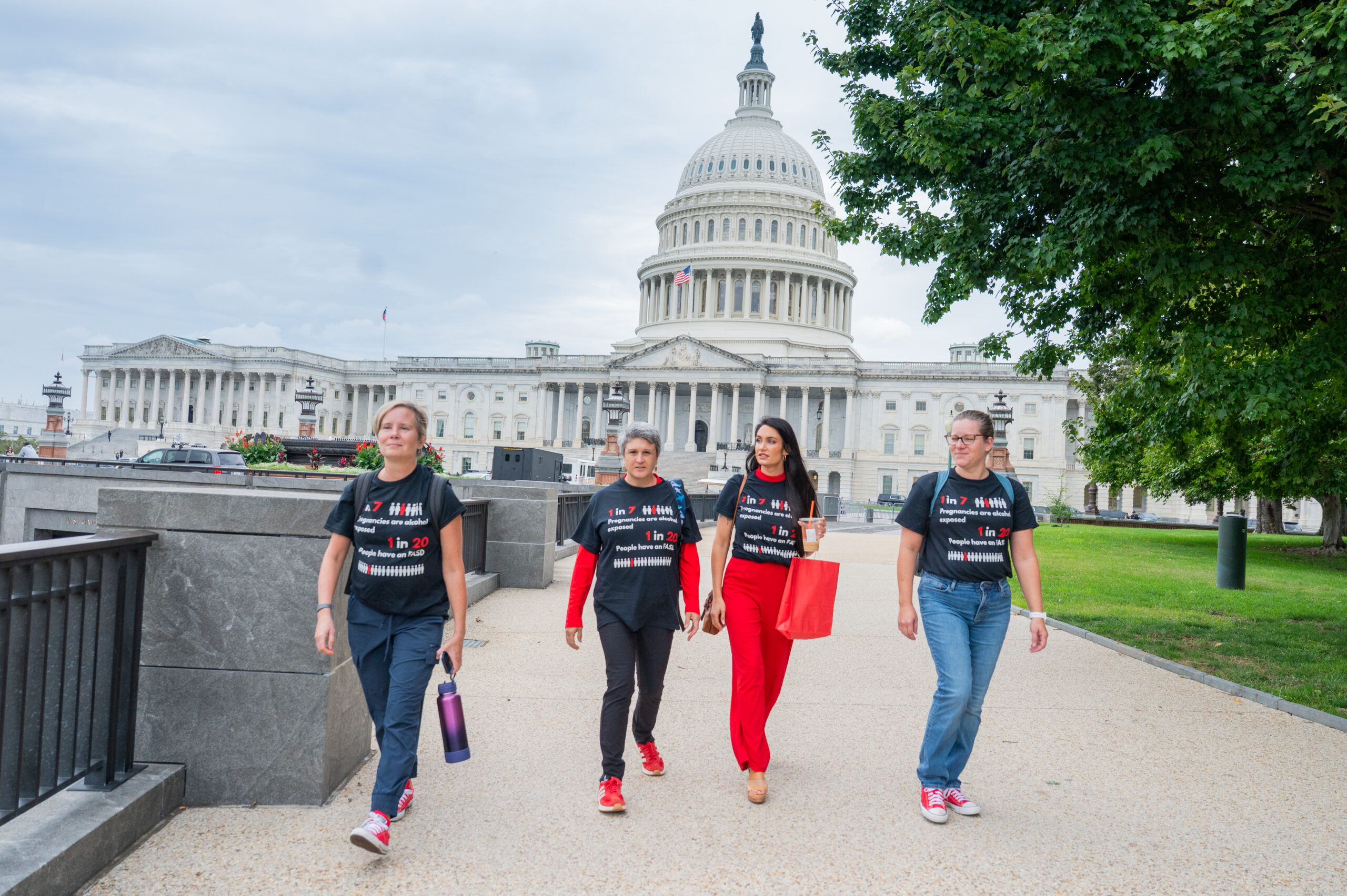
Two weeks ago, over 100 advocates attended nearly 90 meetings with House and Senate offices to urge Congress to Fund FASD. Now, you have the opportunity to extend that impact beyond a single day of advocacy.
What a meeting actually does
A thirty-minute meeting with a legislative aide or a Member of Congress will not immediately lead to policy change or increased funding for FASD programs. What it does is open a door and allow you to start building a relationship that can lead to meaningful change.
Congressional staff are busy, often handling multiple issues and juggling competing priorities. A congressional office can meet with hundreds of constituents each week, and there is a chance that no one in their office knows what FASD is.
During Impact Week, nearly 90 congressional offices met someone who does know what FASD is. That is the whole point of advocating and meeting with your legislators. You may be the only person who walks through that door all year who can explain what prenatal alcohol exposure does, what support actually helps, and what it looks like for a family in their district.
Why now matters more than later
The instinct is to push hardest when a decision is close, or when it seems like there may be movement in Congress. The truth is that if we wait to start advocating until legislators are ready to make a decision, we have already missed the opportunity. Right now, we are advocating for increased funding for federal FASD programs. Congressional offices are going to sort through hundreds of funding requests, so we need to make sure they understand FASD and know who the advocates are before that process starts.
That is why this moment matters. A staffer hearing about FASD for the first time next spring when it is time to submit funding requests will not be willing to fight for this cause. A staffer or Member of Congress who has met with you multiple times is more likely to champion greater funding for FASD programs.
Congress updated the federal FASD law last December. That did not come from one day in Washington. It came from years of advocates returning to the same offices. The law now recognizes much more than it used to: early identification, support across a person’s whole life, and building real capacity in states and tribal communities. What has not arrived is the funding to carry any of it out, and that is what sustained contact and relationships can build.
That gap closes the same way the law passed. The same people, showing up again.
What that looks like from home
None of this requires another trip to Washington!
- Send what you promised. If you told a staffer you would follow up with something, send it this week. The follow-up is often remembered longer than the meeting.
- Thank them by name. Short, specific, by email, to the person who sat with you.
- If you did not attend Impact Week, you have not missed anything. Offices take constituent meetings year-round. You can do this in person in your state or district, over the phone, or on a Zoom call.
- Share something local. A state task force update, a program that worked, a story from your own family if you are willing to tell it.
- Come back in a few months. Then again after that.
Keep going
Impact Week is not the only time we advocate; it is just the week that we all get to do it together in person. The biggest, most impactful changes will come from building relationships and allowing yourself to be a resource to the people with the power to create that change.
We hope you will stay connected to the advocacy community by joining our standing meetings:
- Policy Drop In, Wednesdays (except last Wednesday of each Month), 11:00am to 12:00pm ET. This is an informal meeting where advocates can ask questions, share their experiences, or workshop ideas with the community. This is a great place to jump in.
- Policy Forum, the last Wednesday of each month, 2:00 to 3:00pm ET. This is a structured meeting led by FASD United where we provide updates, issue calls to action, and offer advocacy tools.
One thing you can do today, especially if you were not able to attend Hill Day and Impact Week: contact the Senators or Representatives you did not meet with during Hill Day and ask for a virtual or in-district meeting. FASD United can support you in this by providing an email template, helping you find a contact, preparing you for the meeting, and joining the meeting to support you and speak on the policy details.
Please email [email protected] with questions or if you would like support getting started.