One way advocates can make a powerful impact is through consistent communication with their legislators. Calling, meeting with, and emailing your legislators deepens their understanding of FASD and build trust. Lawmakers want to hear from constituents and from experts in fields they may not be familiar with — and that is exactly what you are as an advocate. Over time, this helps create FASD-informed systems through FASD-informed lawmakers.
We have seen this work on both the federal level and the state level. In Texas, State Representative Ana Hernandez introduced HB 2219, which would ensure students with FASD received education services in public schools. A staff member from Rep. Hernandez’s team shared that he brought the idea for the bill to the Member after hearing FASD advocates speak at a Texas Council on Developmental Disabilities meeting.
At the federal level, few advocates have kept in touch with their legislators more than Melissa Jacobus Cook. Melissa has garnered support for FASD-informed legislation from organizations all over Georgia while making sure her Members of Congress are aware of FASD policy updates and emerging research.
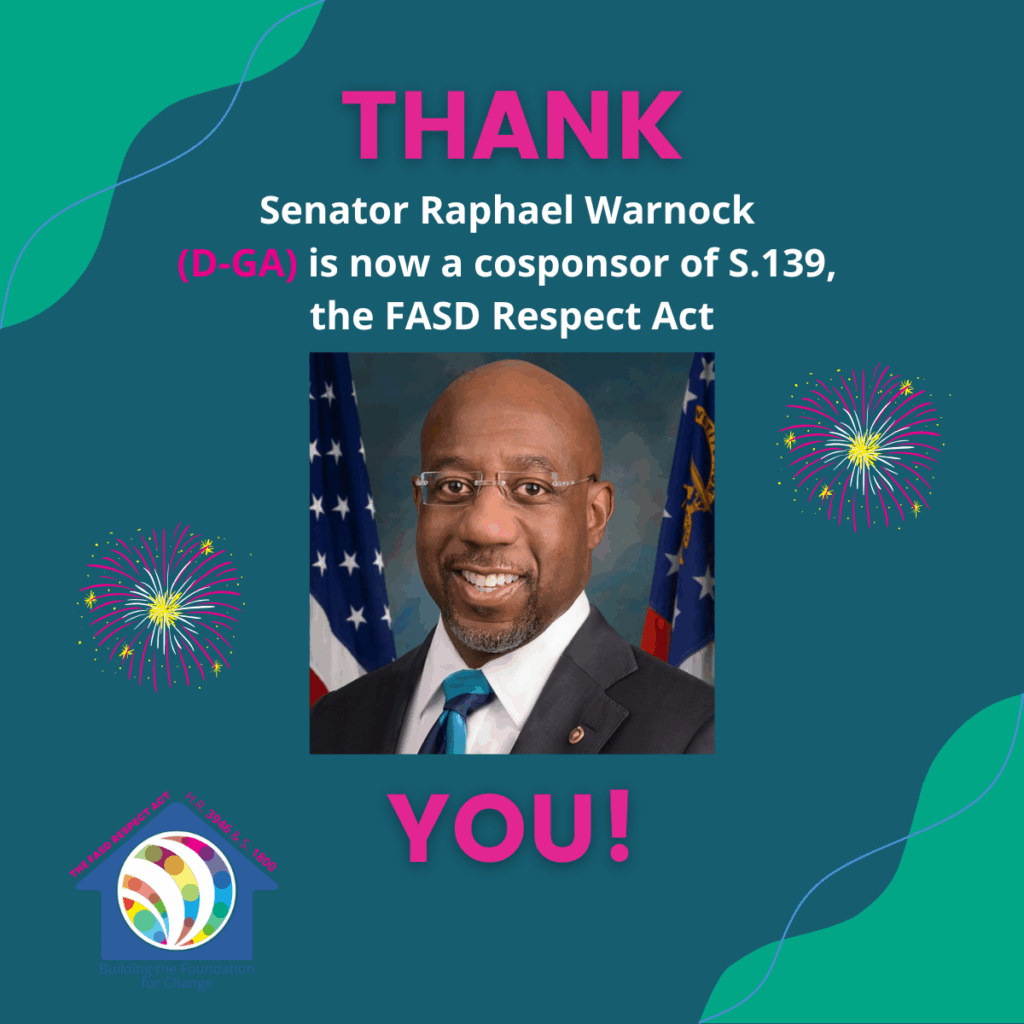
Earlier this week, Melissa received an email from Senator Raphael Warnock (D-GA) regarding the FASD Respect Act, stating “I am proud to cosponsor this legislation. Please know I will keep your thoughts in mind should this legislation come to the floor for a vote.” Senator Warnock goes on to mention a number of bills he has introduced or supported that show his commitment to improving maternal and child health outcomes, including the Maternal Health Quality Improvement Act, Preventing Maternal Death Reauthorization Act, and the Kira Johnson Act. This response shows that legislators are listening and willing to build lines of communication.
Melissa says to “do the FASD research homework and provide it to your Congress members and staff. Make it easy for them to say YES to support FASD.” There is a lot of noise on Capitol Hill with hundreds of different issues vying for the attention of lawmakers. Our advocacy should make supporting FASD easy to understand and follow through on.
Melissa goes on to mention the importance of understanding the context your lawmakers exist in. “Find the common denominator in how their agenda connects to FASD. Read and understand their agenda on their websites and in news media, noting how they market their message.” FASD is not rare, but this fact is not always clear to those who are not FASD-informed. Slide up next to lawmakers by pointing out how FASD intersects with policy priorities.
“Continue to learn from other FASD advocates, self-advocates and experts. Communicate with each other.” -Melissa Jacobus Cook
Consistent constituent communication can have a real influence on Members of Congress who have not decided which way to vote. A report from the Congressional Management Foundation found that 97% of staff members said constituent meetings influence undecided members and that 95% of Representatives view “staying in touch with constituents” as a priority. Your legislators not only want to hear from you; the lack of FASD awareness among decision makers means that they need to hear from you.
How Constituents Can Show Up
Here are a few of the most effective ways to build relationships with your elected officials:
- Emails & Letters: Share your story, ask for support, and thank them when they take action (~90% of staffers surveyed said personalized emails have an influence)
- Phone Calls: Quick, direct, and easy for staff to log as part of constituent opinion (Research has shown calls can increase likelihood of support by 11-12%)
- Meetings: Whether in Washington, D.C., back home in the district, or held virtually, meetings create memorable connections and allow for deeper engagement
- Town Halls & Constituent Events: Attending local events shows you’re engaged and gives opportunities for face-to-face conversation
Call for Respect

September 9th is FASD Awareness Day, and it is the perfect chance to check in with your lawmakers and ask how they will stand with the FASD Community. We hope you will join advocates across the country on September 9th by calling your two Senators and one Representative, urging them to support the FASD community. Learn more here!