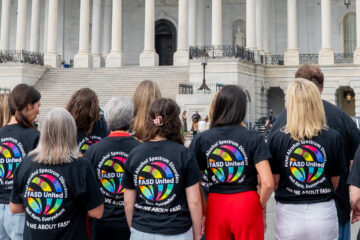
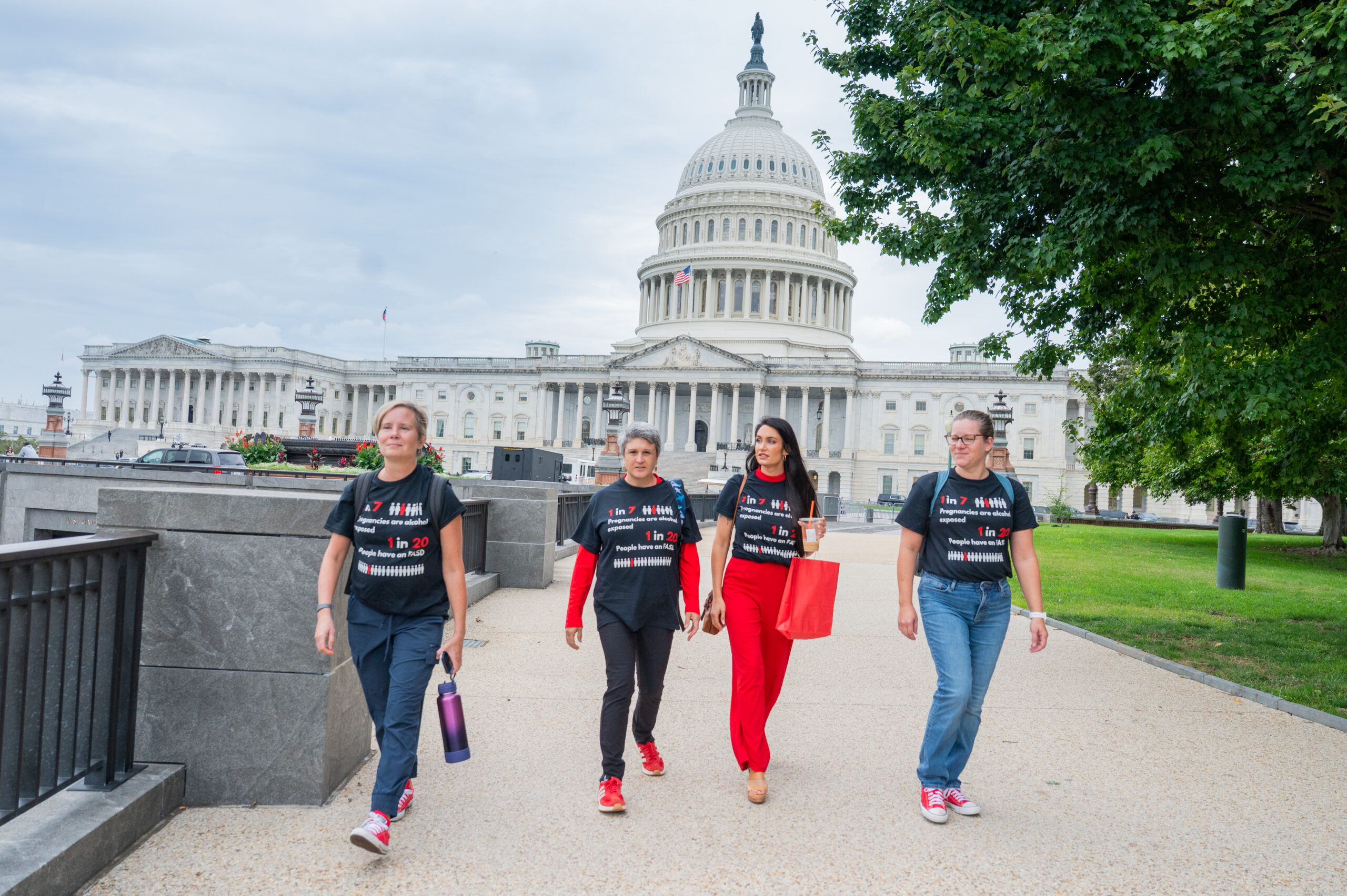
FASD United delivered the closing keynote of the 10th International Research Conference on FASD, exploring how the grassroots FASD advocacy community turned momentum into systems change. We invite you to watch the video recording of the full keynote session on our YouTube channel.
This was the first Conference since the FASD Respect Act provisions were enacted as part of the SUPPORT Reauthorization Act in late 2025, and that milestone helped shape the gathering. Susan Shepard Carlson, J.D., is the FASD United Policy Team leader, and she was joined on stage by FASD United’s COO Jennifer Wisdahl and Policy Coordinator Chris Melfi.
The Room
The session was introduced by Laura Bousquet, a FASD United Family Navigator and self-advocate, who framed the stakes in a single sentence: “The shift does not happen in isolation. It happens at the intersection of policy, research, and living experience.” Those with Living experience, researchers, medical professionals, and more all gathered together to both celebrate and better understand how we can all continue to move the field forward. Looking out and seeing the faces of the people who advocate for the FASD community every day was inspiring and humbling, especially during the final session on the last day of the conference.
The Shift
That shift mentioned by Laura was the focus of our conversation. It was a braided approach made up of three interwoven strands: shifting the story, consistent outreach, and centering living experience. Focusing on positive messaging was the first shift, and it informs the rest of the strategy. Leading with dignity and capability opened doors to new advocates and allies and started to change the way lawmakers viewed FASD. The second strand aimed to turn one-off advocacy into consistent engagement. Making advocacy accessible was a priority because this community is capable of making an amazing impact when well equipped. Completing the braid was the inclusion of self-advocates and families as architects and leaders. While we worked to equip advocates with the tools and resources they need, self-advocates and families led the way and brought data from researchers to life.
The intersection of policy, research, and living experience mentioned by Laura is also a braid. If the national framework for FASD is going to be updated and improved, those three strands need to be cohesive, engaged, and supportive. This is why it was especially rewarding to hear updates from other countries on their progress in the FASD space.
The World
Canada: James Reynolds, Program Lead, FASD Research Team, Kids Brain Health Network.
James shared that most provinces in Canada have FASD initiatives. FASD has been recognized at the federal level in Canada since the early 1990s, but James noted that Canada has failed to ensure coordination and collaboration across systems and levels of government.
Australia: Elizabeth Elliott AM, Distinguished Professor of Paediatrics and Child Health, The University of Sydney.
Elizabeth focused on how living experience, landmark research, relationships with lawmakers, coordination at the national level, and the tenacity of women have powered their advocacy movement. She shared a remarkable story to bring this strategy to life and show the work being done in Australia.
Poland: Magdalena Borkowska, Researcher and Public Health Expert, National Centre for Prevention of Addictions.
Poland has had FASD public awareness campaigns since 2007 and has enacted two bills focused on FASD. Magdalena highlighted work done to update diagnostic guidelines and to establish comprehensive care centers across Poland.
Mexico: Esteban Nolla Hernández, Coordinator of Preventive Strategies for Latin America, Foundation for Research on Alcohol and Society (FISAC).
Mexico currently frames alcohol use during pregnancy as “harmful when excessive.” Esteban shared how Mexico has started to build capacity and address FASD, and they held their first International Conference on FASD in Mexico in 2025.
South Africa: Dr. Leana Olivier, CEO, Foundation for Alcohol Related Research (FARR).
The Foundation for Alcohol Related Research (FARR) kickstarted FASD policy work in South Africa in 1997. Dr. Leana Olivier expressed that South Africa does not have comprehensive FASD programs, and the country does not recognize FASD as a public health issue.
Ireland: Áine O’Halloran, FASD Hub Coordinator, FASD Ireland.
Ireland does not have a national strategy or framework to address FASD, despite its noted impact across systems of care. Áine noted that awareness is growing, but there are significant gaps in services and recognition that need to be addressed.
The Path Ahead
Hearing where each country stands made one thing clear: the specifics differ, but the needs do not. The systems, timelines, and politics vary from place to place, yet every movement is working toward the same goal of a coordinated, FASD-informed framework that recognizes and supports the people living with the condition while limiting prenatal alcohol exposure. The FASD Respect Act is one example of how that progress can take shape, and it remains a starting point rather than a finished story. The work now turns to implementation and to keeping policy, research, and living experience braided tightly together. That combination is what brought this effort to where it stands today, and it is what will continue to move the field forward.